 Columbus










Gorafe Desert: Bikepacking Where Europe Goes Quiet

Gorafe Desert: Where Europe Goes Quiet
Riding the Andalusian Badlands on the Cinelli Hobogeo. A story about adventure, the spirit of exploration, and one of the strangest, most beautiful landscapes left in Europe — and the riders who keep finding their way to it.
The Gorafe Desert sits in eastern Andalusia, in the province of Granada — a corner of southern Spain that looks more like the surface of Mars than southern Europe. Eroded canyons, empty plateaus, hours of gravel without a single car. It's one of the great riding territories on the continent, and it's still mostly secret. This is what you'll find there, why riders go, and which bike — the Cinelli Hobogeo — was built for terrain like it.
- Where — Gorafe, Granada province, in the heart of the Andalusian Badlands.
- What's there — Desert, sierra, gravel, ultra race lines, near-total silence.
- What runs through it — Badlands and Utopia, two of Europe's hardest bikepacking races.
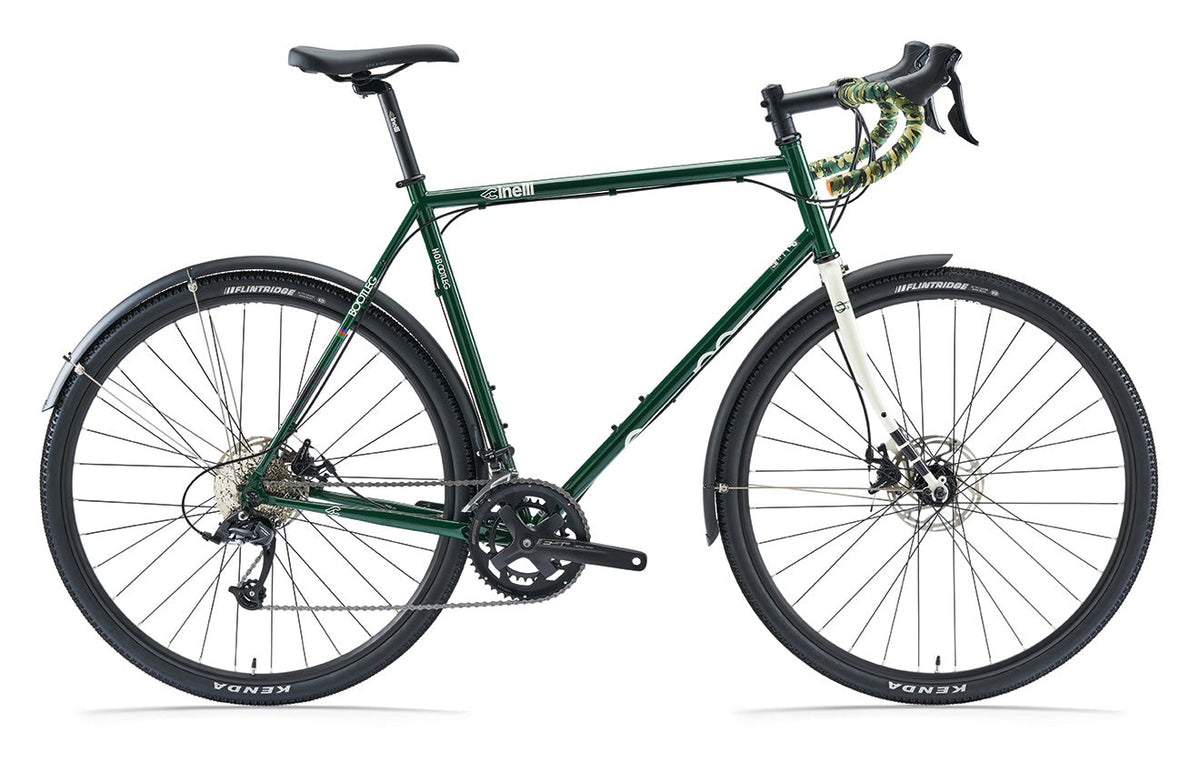
- The bike — Cinelli Hobogeo, an adventure-touring frame built to disappear under you on long mixed-terrain days.
01 — The place A desert in the middle of Europe
There's a moment, somewhere on the dirt road that drops down into the Gorafe Desert, when the noise stops. No cars, no fences, no signal. Just clay walls eroded into shapes that don't quite belong to a continent we thought we knew. Spires, canyons, plateaus the colour of rust. The wind, when there is wind. The crunch of gravel under tyres.
The Gorafe Desert is the largest desert in Europe, depending on how you define the word. It's part of the wider Guadix–Baza basin, in the province of Granada, in eastern Andalusia. Geologists love it. Filmmakers have used it for everything from spaghetti westerns to sci-fi shoots. For cyclists, it's a different kind of attraction: a place where the map gets quiet, where the next petrol station is a long, slow climb away, and where what you brought with you matters more than what's around the corner.
Riding into Gorafe doesn't feel like discovering a destination. It feels like discovering that this is still possible, in 2026, less than two hours from a budget flight.

02 — The terrain Five ecosystems, one base
What makes Gorafe rare isn't just the desert. It's that the desert is thirty minutes from pine forest, an hour from high mountain, two hours from the sea. You can ride out from a single point and pass through landscapes that, almost anywhere else in Europe, would each be their own holiday.
- Gorafe DesertBadlands · canyons · sand
- TabernasEurope's only true desert
- Sierra de CazorlaPine forests · long climbs
- Sierra NevadaYear-round high mountain
- Almería coastSea cliffs · empty roads
- GranadaCultural pivot · tapas finish
Canyon floor in the morning, pine forest by lunch, mountain pass in the afternoon, fishing village at dusk. There aren't many places in Europe where this is geographically possible. Gorafe is one of them — and most of it can be ridden on dirt, on the kind of routes you actually want to put on a bikepacking bike.

03 — The riders Who finds their way to Gorafe
Gorafe isn't a place people end up at by accident. It's at the end of a small road, in a province that doesn't make headlines. The riders who get here have, for the most part, gone looking. They want unpaved, they want remote, they want a kind of cycling that hasn't been polished into a postcard.
Gravel riders
Long mixed-surface days, smooth dirt to chunky desert tracks, lunch in places without Wi-Fi.
Bikepackers
Multi-day, self-supported, hauling everything you need across canyons and sierra.
Ultra racers
Badlands and Utopia route reconnaissance, threshold training, deliberate suffering.
Slow travellers
One bike, one bag, two weeks. Off the apps, into the landscape.
Planning a winter or shoulder-season escape? Browse Cinelli's Adventure & Touring range — the bikes built for terrain like this.
04 — The ultra scene Badlands, Utopia, and the lines that run through
It's no accident that some of Europe's most iconic bikepacking races pass through this corner of Andalusia. Badlands — held each year at the end of summer — has done more than any single event to put this terrain on the global cycling map. Utopia threads its way through the same geography with a different philosophy. Together they've created a small but serious community of riders who keep coming back, season after season.
You feel it on the road. In late August and early September, the desert tracks have other tyre prints on them. Bikes lean against the walls of cafés in villages that don't usually see them. Riders sit at communal tables, comparing route sheets, sharing the kind of advice you can't get from a Strava heatmap. There's a culture forming here, slowly, on its own terms.

05 — The bike Why the Cinelli Hobogeo
Terrain this varied is brutal on the wrong bike. Gravel one hour, technical singletrack the next, then a stretch of deep sand, then a fast tarmac descent into a village that's a thousand years older than the road you arrived on. To handle all of it — fully loaded, day after day — you need a frame that's genuinely versatile, comfortable on long distances, and stable under weight.
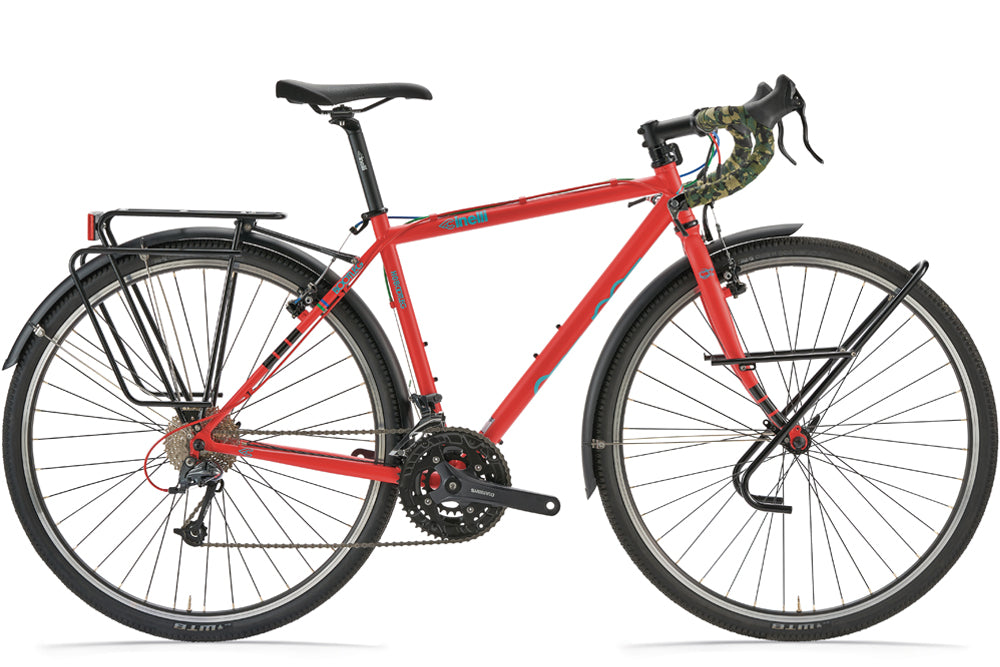
This is what the Cinelli Hobogeo was built for. Steel frame and fork for compliance and durability across consecutive long days. Geometry tuned for stable handling with front and rear bags. Clearance for the wide, fast-rolling tyres you actually want on mixed terrain. Mounts where you need them, when "where's the next shop" stops being a rhetorical question.
It's a bike that disappears under you and lets the place do the talking.
— On the Hobogeo, Gorafe Desert
The Hobogeo isn't trying to be a race bike that pretends to be adventurous. It's the opposite: a bike with a long-distance soul, built to take the kind of beating a frame really gets when it leaves the tarmac for a fortnight. It's why riders like Mary and Nico — long-time cyclists based in Gorafe itself — have made it their tool of choice across the deserts of Andalusia, the Atlas of Morocco, the wind of Patagonia and the gravel of Iceland.

06 — Beyond Gorafe The bigger journey
Gorafe is a doorway, not a destination. The riders who fall in love with it tend to take the same bike, the same approach, and the same hunger for unpaved roads somewhere else: the Atlas Mountains and the Sahara in Morocco, the steppes of Patagonia, the wild plateaus of Türkiye, the volcanic gravel of Iceland. The map keeps getting bigger.
That's the real point. Places like Gorafe aren't endpoints. They're an invitation — a reminder that most of what's worth riding hasn't been built into an app yet. The bike is what makes that possible. And the right bike is one that can keep going long after the asphalt stops trying.
07 — If you want to ride here A practical note
Gorafe isn't difficult to get to. It's about an hour and a quarter by car from Granada airport, and around two hours from Almería or Málaga. There are bike-friendly cafés in the area, and a small but growing network of riders, hosts and route designers who know the terrain. Mary and Nico, who appear earlier in this story, run Bike Cueva Gorafe — a base camp set inside restored cave dwellings, and one of the easiest ways for riders from abroad to land softly in the area. They also organise expeditions further afield with BikeAdventure Expedition. If you want a starting point that already understands cyclists, it's a good one.

The basics
- Getting there
- ~1h15 by car from Granada (GRX); ~2h from Almería (LEI); ~2h45 from Málaga (AGP). Hire car recommended.
- Best season
- Mid-September to mid-November and mid-March to early June. Summer is intense in the desert but rideable in the sierras.
- Routes
- Badlands and Utopia GPX files are the best-known starting points. Smaller loops out of Gorafe village are easy to design.
- Bike
- A capable adventure-touring frame with wide tyres and rack mounts. The Cinelli Hobogeo is purpose-built for this.
08 — FAQ Frequently asked
Where is the Gorafe Desert?
The Gorafe Desert is in the province of Granada, in eastern Andalusia, southern Spain. It is part of the Guadix–Baza basin and one of Europe's most spectacular badland landscapes, characterised by eroded canyons, plateaus and clay formations.
Is it really a desert?
It's a semi-arid desert by climate, and one of the largest desert landscapes in continental Europe. The neighbouring Tabernas Desert, two hours south, is often cited as the only "true" desert on the continent. For cyclists, both ride like deserts: dry, exposed, and remote.
What kind of cycling can I do around Gorafe?
Gravel, MTB, road and bikepacking. Within a single trip you can reach the Tabernas Desert, the Sierra de Cazorla, the Sierra Nevada, Granada and the Almería coast — giving you canyons, high mountains, pine forests and coastline from one base.
Which bike is best for Gorafe?
A capable adventure-touring or gravel frame with clearance for wide tyres, rack and bag mounts, and stable loaded handling. The Cinelli Hobogeo was designed specifically for terrain of this kind: long, mixed-surface, often loaded, often remote.
Is Gorafe near the Badlands and Utopia races?
Yes. Both Badlands and Utopia — two of Europe's most iconic bikepacking races — run through or close to the Gorafe area. Many participants use the village and the surrounding desert as a training and recovery base.
When is the best season to ride in Gorafe?
The most comfortable riding windows are mid-September to mid-November and mid-March to early June. High summer is feasible at altitude (Sierra Nevada and Sierra de Cazorla) but extreme in the desert. Winter is rideable, but cold at night.
Do I need a guide, or can I ride independently?
Both work. Riders comfortable with self-supported gravel and bikepacking will find plenty of public GPX routes and trail beta online. For those who prefer to land somewhere that already understands cyclists, local hosts like Bike Cueva Gorafe also organise guided trips in Andalusia and abroad with BikeAdventure Expedition.
Hobogeo. Built for the long way.
The bike for the places where the map goes quiet. Designed for desert tracks, sierra passes, and the kind of routes you remember for years.


