 Columbus










The Logo That Broke : une histoire de VTT Cinelli

The Logo That Broke
In the early '90s, at the height of the mountain bike boom, Cinelli took its own logo apart, fracturing it across frames in graffiti lettering, zebra stripes, and colour panels that barely held together. Thirty years later, the break is still visible.

1985 The Rampichino, sold by mail order
When the Rampichino, Italy's and arguably Europe's first mountain bike, was revealed to the Italian public in 1985, it wasn't presented in a bike shop. It appeared as an eight-page spread in Airone, one of Italy's largest-circulating magazines, modelled closely on National Geographic and built around the outdoors.
In a limited, signed edition of 1,000 pieces, the bike was sold exclusively by mail order, with coupons cut directly from the magazine page. At the time, the term "mountain bike" didn't formally exist yet in Italian. The Rampichino was introduced to a market that had never heard of off-road cycling on the West Coast of the United States, framed simply as an alternative vehicle for ecological exploration.

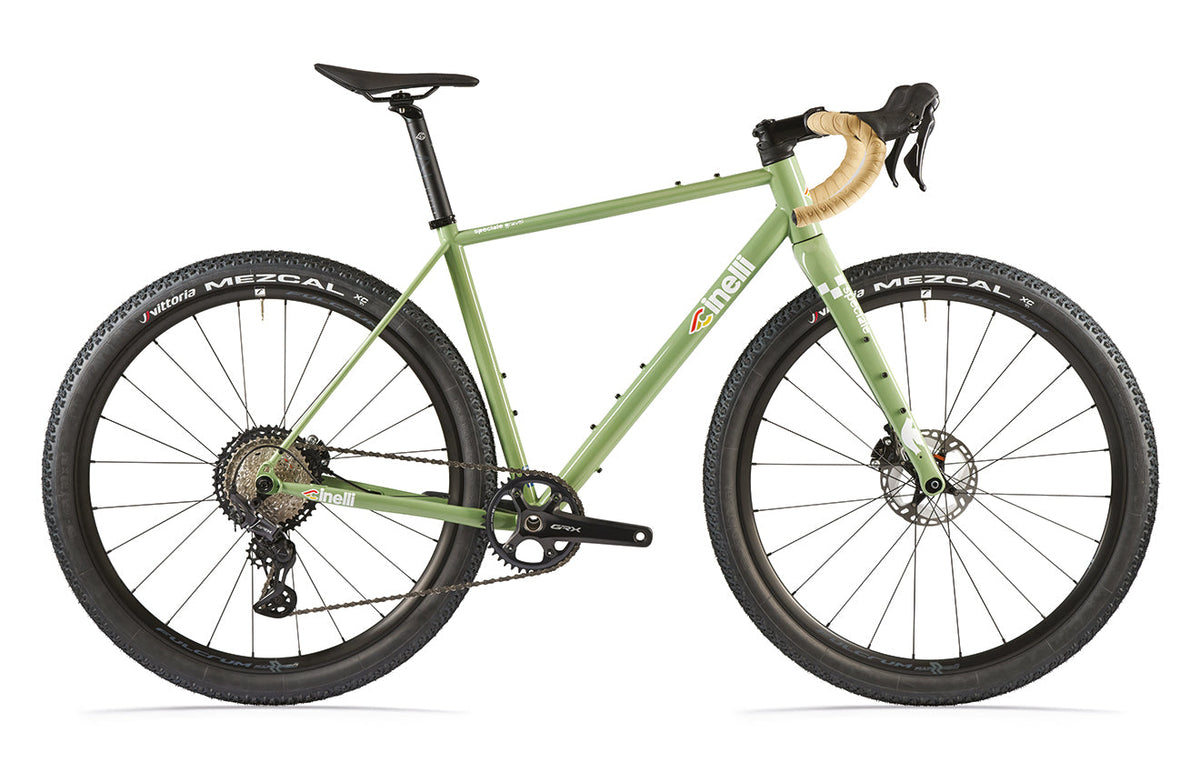
It came in a single colour, military green, and the name stuck so well that rampichino (the Italian-English dictionary translation, "tree-creeper": a small bird known for climbing trunks and tumbling back down when it can't find its way) is still the word many Italians use for "mountain bike" today. All 1,000 units sold within months, to buyers who had never seen the bike in person and bought on curiosity and trust alone. It remains, on record, the most successful direct-marketing campaign in the history of Italian cycling.
1986 – 1990 The mountain bike boom hits Milan
By the late '80s, the mountain bike was no longer a niche import. In Italy, Cinelli was considered the sector's undisputed leader, and the market's demand for novelty after novelty gave the brand's designers room to experiment in ways a road bike catalog never would have allowed.
The model names alone tell the story: Rampichino, Sentiero, Ottomilainsu, Argento Vivo, Tuttifruti. Each one came with its own colourway and its own graphic concept, treated less like a product spec sheet and more like an art direction brief.

1992 The logo gets taken apart
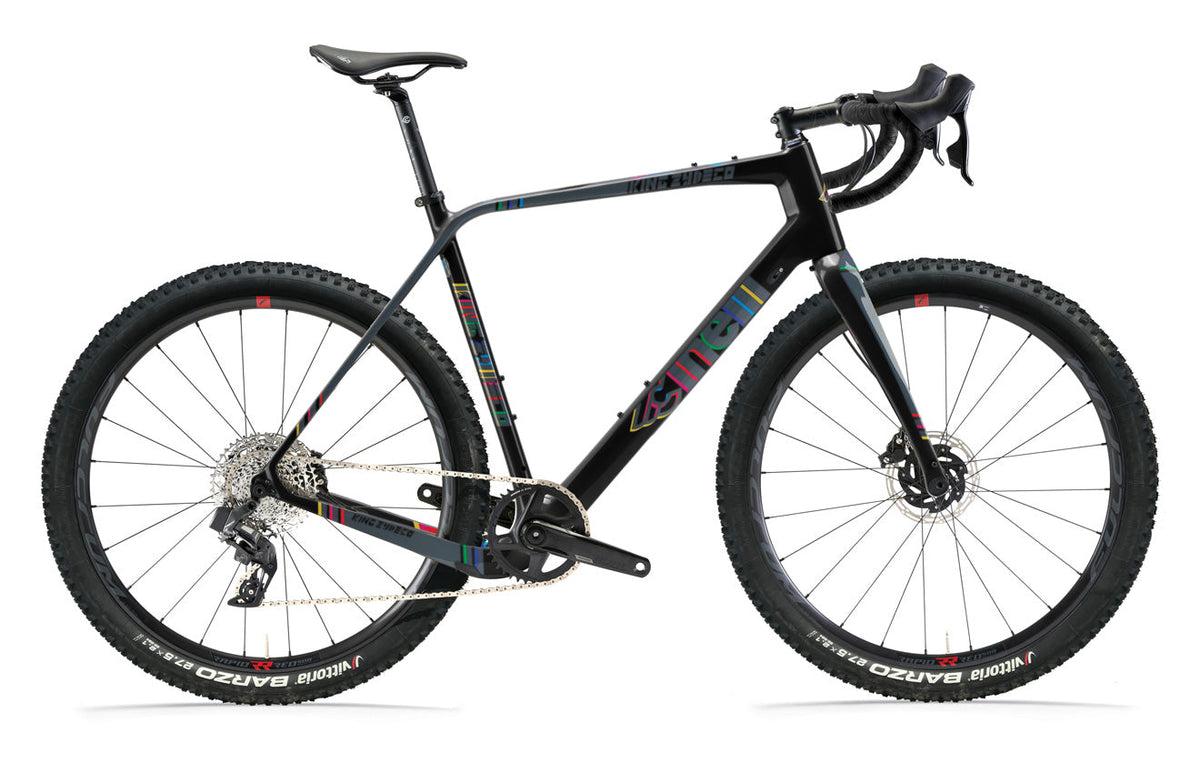
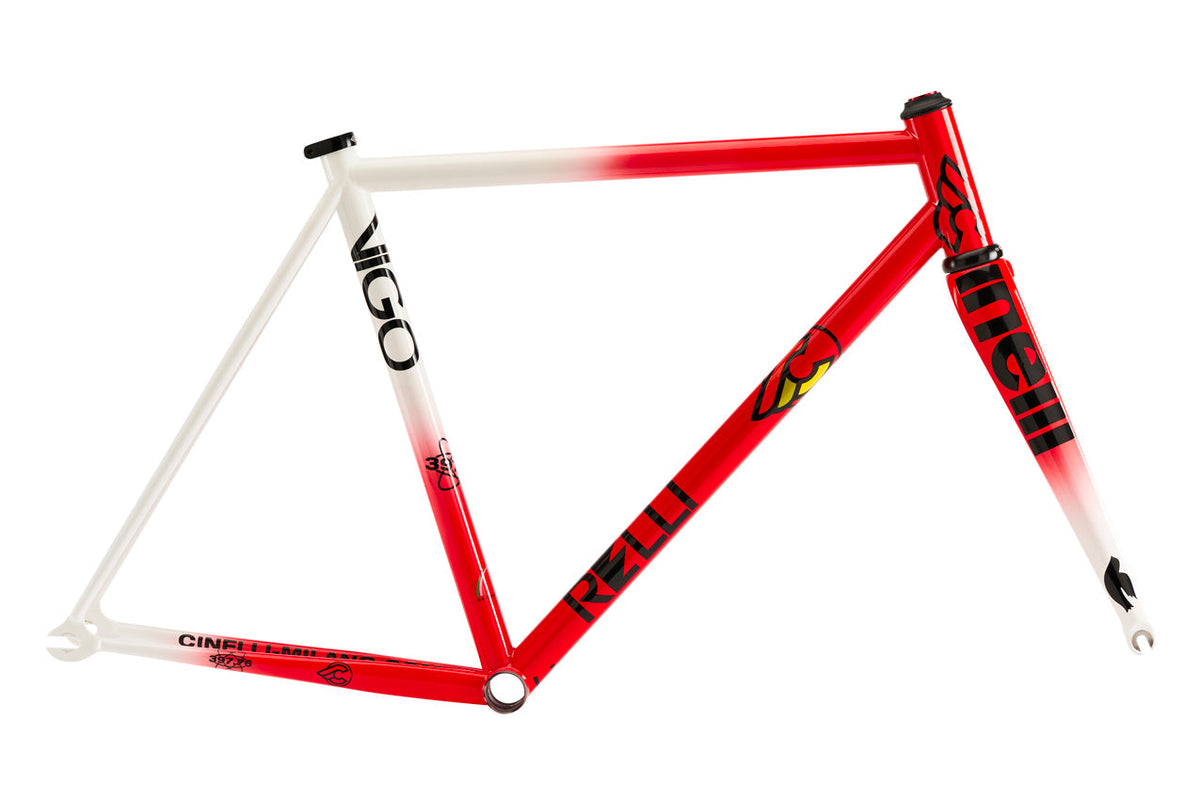
Somewhere in the development boards from this period, one detail keeps recurring: the Cinelli wordmark, rendered in a fractured, multi-directional graffiti style. Letters rotate against each other. Strokes fragment mid-word. The logo is stretched across a top tube until it barely holds its shape, present and legible if you look for it, but no longer sitting quietly in one place.
This wasn't carelessness. It reads as a deliberate choice, the same logic that let a Milanese handlebar company build the first European mountain bike: if the product could be reinvented, so could the way its name was written.

The same spirit shows up on finished frames from the period. One top tube, shot against powder blue, carries the logo in black and white with a single pop of yellow-green. Another, against magenta, wraps the tube in thick zebra stripes where the letters dissolve almost entirely into the pattern, recognisable only because you already know what you're looking for.
1992 – 1993 Sentiero, Ottomilainsu, and the graphics that followed
The Sentiero and Ottomilainsu (the latter's name carrying a trailing apostrophe in period catalogs, sometimes printed as Ottomilainsu') were among the most visually ambitious bikes to come out of this run. Purple frames with green pinstripes. Pearl finishes. Decal sheets that look, on close inspection, like collage work.

Enormous amounts of creative energy were poured into elaborating the bicycles with the most playful, witty, and fantastic decorations imaginable.
Very few of these bikes were ever exported. The wildest graphics Cinelli produced in this era were, by and large, a conversation the brand was having with the Italian market alone, which may be part of why so little of it survives in public memory outside a handful of forums and private archives.
Early-to-mid 1990s The Machine: the line that stayed
The Rampichino's runaway success (the sellout, the re-edition, the second sellout) forced Cinelli's hand. A single excursion-oriented model couldn't carry an entire category anymore. What followed was a proper mountain bike line with real price tiers and sharper specialisation, and at the top of it sat a new flagship: The Machine.

Across its variations (The Machine, The Absolute Machine, The Next Machine) this bicycle stayed Cinelli's top-of-the-line mountain bike for more than a decade. It evolved with the times, picking up early carbon-fibre handlebars and elevated chain-stay attachments. Its core stayed consistent: Columbus MAX tubing, the first tubes in the world with oriented ellipses, purpose-built for off-road use, paired with sparse silver decoration on a black frame and geometry built to look as aggressive as the name suggested.
The Sentiero and Ottomilainsu pushed the logo loud. The Machine went the other way, proving restraint could carry just as much weight. Both instincts came out of the same five-year stretch.
2026 The break, again
What stands out, looking back at these boards, is how confident the decision was. The designers were testing how far the logo could be pushed before it stopped being recognisable, then stopping exactly one step short of that line.
That same question is being asked again, on a different object.


